Wang Huiyao: What Has China’s Reform and Opening-Up Brought to the World Economy?
The year2024marks the46th anniversary of China’s reform and opening-up.Over the past four decades,China’s economy has not only achieved remarkable accomplishments but has also become a significant engine for global economic development.How has China’s reform and opening-up profoundly influenced the global economic landscape?As the world’s largest developing country,what references does China’s experience offer to other developing nations and regions?In the face of numerous challenges on the path to global economic recovery,how will China further advance comprehensive deepening reforms and expand opening-up to contribute to global growth momentum?Wang Huiyao,founder and president of the Center for China and Globalization(CCG),recently shared his observations on China’s reform and opening-up and his expectations for the future in an exclusive interview with China News Service’s“West-East Talk”.
Here are the excerpts of the interview:
CNS:Since the initiation of reform and opening-up,China has achieved significant economic progress.How has this impacted the global economic landscape?How do you perceive the evolution of China’s role and position in the global economy?
Wang Huiyao:China’s reform and opening-up has spanned over four decades.During this period,more than800million Chinese people have been lifted out of poverty,with many attaining moderate prosperity.China has also become the world’s second-largest economy.
Since the launch of reform and opening-up,China’s rapid economic growth has provided vast market and investment opportunities for the world,driving global trade and investment expansion.China’s economic growth has had a significantly positive impact on global economic growth,particularly during financial crises and economic recessions,when China’s stable growth played a crucial role in global recovery.China has actively participated in global economic governance and the development of the multilateral trading system,promoting the process of globalization.Amid rising anti-globalization sentiments and trade protectionism,China has steadfastly supported free trade and open markets,advocated multilateralism,and upheld the stability and fairness of the global economic order.
China’s reform and opening-up have also positively influenced developing countries.Through the Belt and Road Initiative,which involves investment,aid,and trade cooperation,China has assisted developing countries in enhancing infrastructure construction,promoting economic development,and reducing poverty.
For instance,BRICS,which includes China,serves as a platform for mutual benefit and win-win outcomes among developing countries.In January2024,Saudi Arabia,Egypt,the United Arab Emirates(UAE),Iran,and Ethiopia became full members of BRICS,with more developing countries applying to join.China’s economic development presents opportunities for developing countries and will further drive the evolution of the BRICS mechanism,granting developing countries a greater voice in global governance.
CNS:In your view,what are the most important experiences from China’s reform and opening-up?What insights and experiences does China’s economic development model offer to other developing countries and regions?
Wang Huiyao:Many people compare China’s reform and opening-up with the economic takeoff of the“Four Asian Tigers”,including China’s Hong Kong and China’s Taiwan.However,there are significant differences between the two.
From the perspective of national conditions,China is a large country with a population unevenly distributed across a vast territory.Moreover,before integrating into economic globalization,China adopted a planned economy system typical of socialist countries,necessitating a transition to a market economy.At that time,China“crossed the river by feeling the stones”,adopting a gradual reform path.Through pilot programs and progressively expanding opening-up,China managed the pace of reform incrementally,avoiding severe shocks and uncontrollable risks.Starting from special economic zones in coastal areas,new reform models and economic achievements gradually extended into China’s interior.
As a Chinese saying goes:"To get rich,build roads first."China has prioritized infrastructure development,particularly investments in transportation,communications,and energy.By the end of 2022,China’s total road mileage reached 5.35 million kilometers,including 177,000 kilometers of expressways,ranking first in the world.By the end of 2025,China’s railway operational mileage is expected to reach 165,000 kilometers,including 50,000 kilometers of high-speed rail.As of the end of April 2024,China had built 3.748 million 5G base stations,with over 265G base stations per 10,000 people.These developments have provided a solid foundation for China’s rapid economic growth.
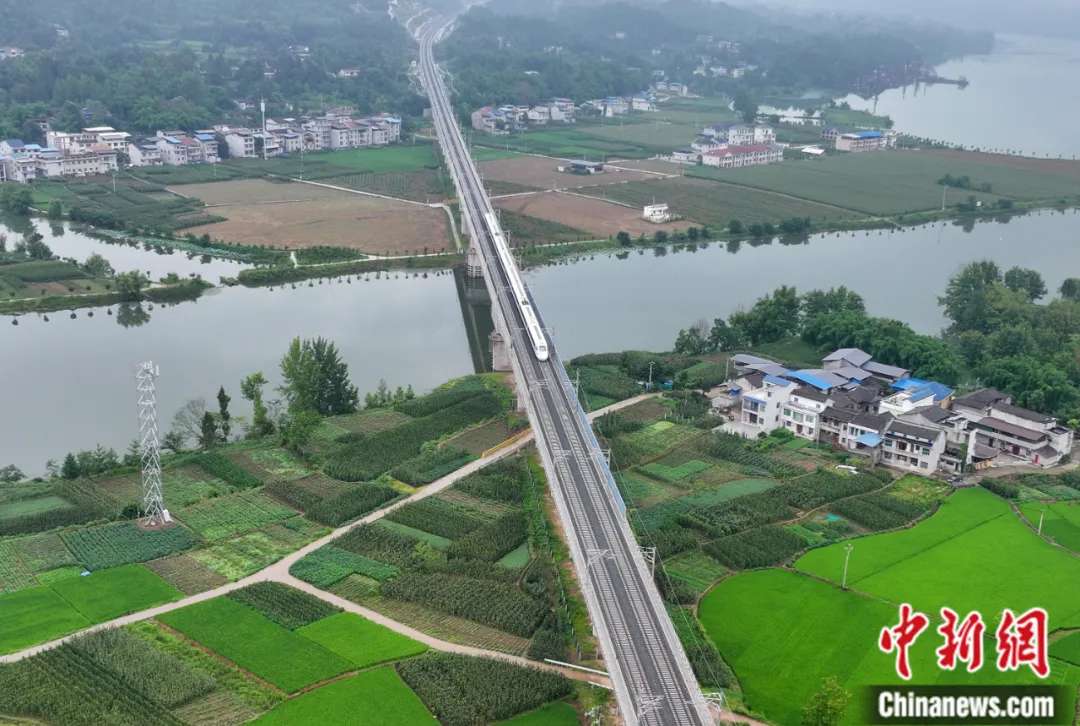
The newly built Hanzhong-Bazhong-Nanchong Railway's Bazhong-Nanchong section is officially opened for operation,Jun.27,2024.(Photo from CNS)
China’s economic development model emphasizes industrial upgrading and technological innovation.By introducing foreign investment,nurturing domestic enterprises,and enhancing independent innovation,China has driven the upgrading of its industrial structure and the improvement of technological capabilities.
The above experiences can provide valuable references for other developing countries.However,there is no one-size-fits-all model.I believe China’s key experience is to choose a reform path suited to its national conditions and development stage to promote economic development and prosperity.
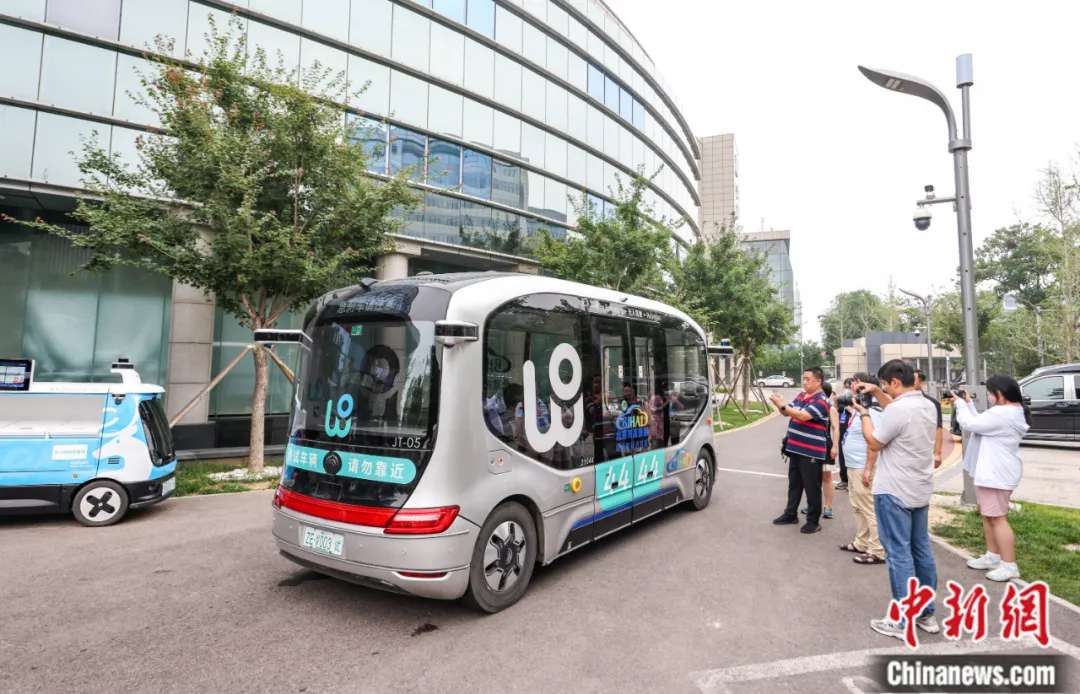
People visit an autonomous driving vehicle at autonomous driving demonstration zone of Yizhuang in Beijing,capital of China.(Photo from CNS)
CNS:Under current domestic and international circumstances,why does China emphasize continuing to deepen reforms?What implications will this have for China’s future economy and the world economy?
Wang Huiyao:Reform is the driving force of development,and development is key to achieving people’s well-being.Reform and opening-up are ongoing process,never completed.Although China’s economy has maintained sound development momentum,it still faces complex and severe domestic and international situations,with considerable downward economic pressure.In this context,further comprehensively deepening reforms to inject new momentum into China’s economic and social stability is crucial not only for advancing Chinese modernization but also for the healthy development of economic globalization.
Reforms are driven by problems,which are solved through deepening and further deepening through continuous problem-solving.By persistently deepening reforms,China aims to address deep-rooted institutional obstacles and structural contradictions,fully unleash societal vitality for entrepreneurship and innovation,and inject strong momentum into advancing Chinese modernization.The robust development of China’s high-level open economy will boost global confidence and bring more new development opportunities worldwide.As China’s comprehensive national strength continues to grow,it will be better positioned to promote and lead a new round of economic globalization,steering it toward a more inclusive and universal beneficial direction.
CNS:The global economic recovery still faces challenges.How can China better contribute to injecting momentum into global economic recovery in the future?
Wang Huiyao:Since the launch of reform and opening-up,China has introduced a series of major measures to elevate reform and opening-up to higher levels,releasing significant dividends for its economic development.The rapidly growing Chinese economy has become a major stabilizer and source of momentum for global economic growth.Today,faced with complex and severe domestic and international situations,China needs to timely introduce new reform measures to inject fresh momentum into its own economic development and global economic recovery.
Comprehensively deepening reforms can intensify efforts to dismantle the urban-rural dual structure,injecting sustained momentum for China’s economic health over the coming decades.
Expanding opening-up,on one hand,China can align with the Comprehensive and Progressive Agreement for Trans-Pacific Partnership(CPTPP)to advance high-level opening-up.On the other hand,China can leverage its strengths in infrastructure,clean energy,and other areas through bilateral and multilateral cooperation mechanisms such as the Belt and Road Initiative,South-South cooperation,and third-party market cooperation.This will encourage Chinese enterprises to“go global”,creating new opportunities and injecting new momentum into global economic recovery and growth.
About the Interviewee:
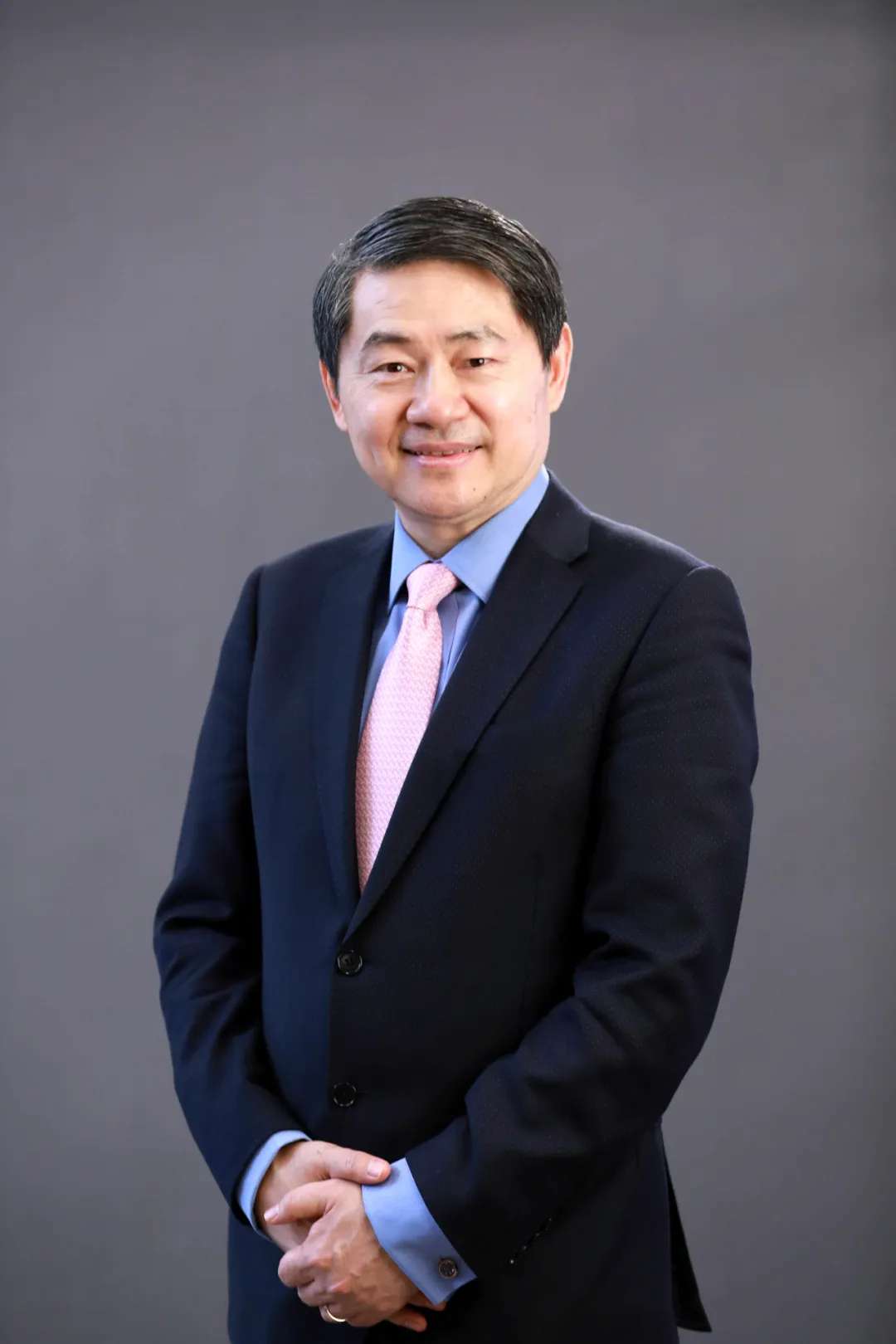
Wang Huiyao is the founder and president of the Center for China and Globalization(CCG),Vice Chairman of China Association for International Economic Cooperation under the China’s Ministry of Commerce,Vice Chairman of China Public Relations Association,Director of Chinese People’s Institute of Foreign Affairs,and Dean of the Institute of Development at Southwestern University of Finance and Economics.He has authored and edited over one hundred books in Chinese and English,including“Returned Scholars to China”“Introduction to International Talent Studies”and“Talent War2.0”.
(Editor:Cathy Liu)